 Overthought
Why do you almost never laugh alone?
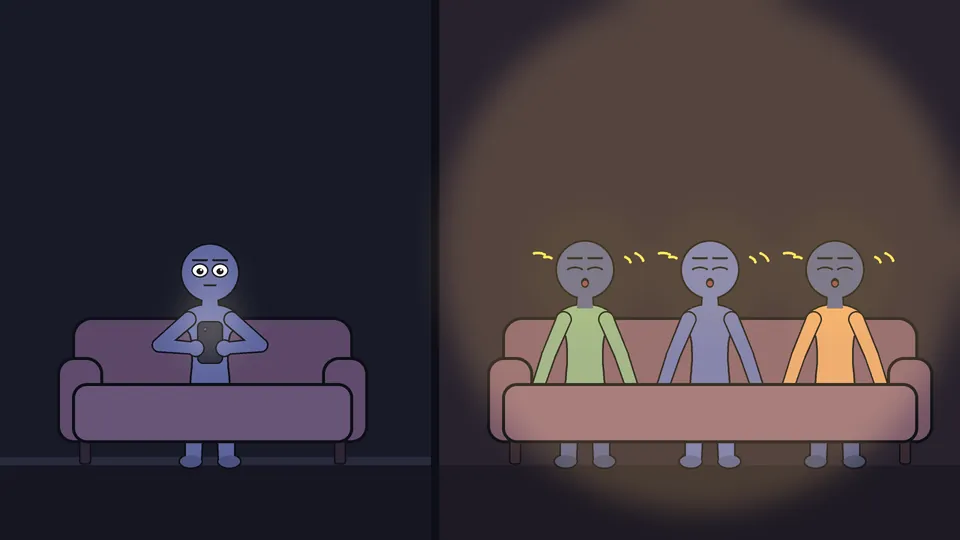
Laughter is mostly a social signal, not a reaction to jokes. People laugh far more often with others than when they're alone.
What's going on
A laugh says “I'm with you” and “we're fine.” It's probably older than language, a way of bonding with the people around you. That's why a video that made you cry laughing with friends barely gets a smile when you watch it alone.
When students kept laugh diaries, they laughed about 30 times more often around others than alone, and most real-life laughs followed ordinary lines rather than jokes.
The full page is in the Field Guide
The whole study behind Laughing Together, plus one small thing to notice this week, in Your Brain Isn't Broken. Until then, start with the free mini guide.
Get the free mini guide
How glitchy is your brain?
20 quick questions. Find your score and your glitch type.
Take the quiz
For education and curiosity. This page isn't medical or mental health advice.